In short
- The biggest risk to an empty property is a problem nobody notices for days.
- Check your insurance: many policies limit cover once a home has been empty for 30 or 60 days.
- Set up regular checks, turn off water where you can, and keep keyholders’ details up to date.
- Give neighbours, guests and passers-by a simple way to alert you, without putting your phone number on the door.
When you live in a house, you notice things. The drip under the sink, the window that didn’t latch, the smell of damp. When a property sits empty, as holiday lets, second homes and homes between tenants often do, those small problems have days or weeks to become big ones.
Water is the classic example. Insurers paid out a record £758 million for weather-related damage to homes in 2025, including burst pipes and escape of water, as part of record property payouts of £6.1 billion.1 For empty homes the bills are especially large. Prestige Underwriting found 41.4% of escape-of-water claims on its unoccupied and holiday-home policies were over £20,000, and 22.4% were over £50,000, and it links that to leaks going unnoticed for longer.2
Check what your insurance actually covers
This catches many owners out. The Financial Ombudsman Service says most home insurance policies limit cover for theft, vandalism and escape of water once a property has been unoccupied for a set period, usually 30 or 60 days, and that policies don’t always define “unoccupied” clearly.3
- Read the unoccupancy section of your policy, and tell your insurer if the property will be empty for longer than the limit.
- Look for conditions such as regular inspections, the water being turned off and drained, or heating kept at a minimum temperature in winter.
- Holiday lets usually need a specialist policy rather than standard home insurance.
- Keep a simple log of visits and checks. If you ever need to claim, it shows you met the conditions.
Reduce the risks
Leaks and water damage
- Turn the water off at the stopcock between stays if your setup allows it, and know where the stopcock is.
- Keep the heating on low in cold weather to stop pipes freezing.
- Fit leak sensors under sinks, near the boiler and by the washing machine.
- Lag exposed pipes in lofts, garages and outbuildings.
Break-ins and security
- Use timer switches for lights, and ask a neighbour to clear post and park on the drive occasionally.
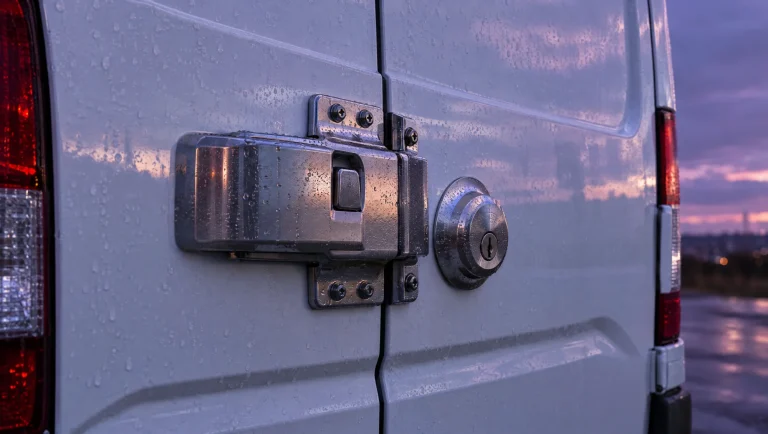
- Check doors and windows after every changeover, and change key safe codes regularly.
- Don’t announce on social media that the property is empty.
The Crime Survey for England and Wales estimated domestic burglary fell 22% to 327,000 incidents in the year to December 2025,4 but only about 5% of residential burglaries led to a charge in the year to March 2026.5 Prevention, and spotting problems quickly, matter far more than what happens afterwards.
The real gap: who tells you?
Often the first person to notice a problem isn’t the owner. It’s a neighbour who sees water running down the wall, a guest who finds the back door won’t lock, or a passer-by who spots a broken window. The question is whether they can reach you.
The traditional answer is a phone number taped inside a window or left with one neighbour. It goes out of date, it’s often for one person who may be on holiday themselves, and it tells everyone who walks past exactly who owns the property.
A QR code on the door, keyholders on alert
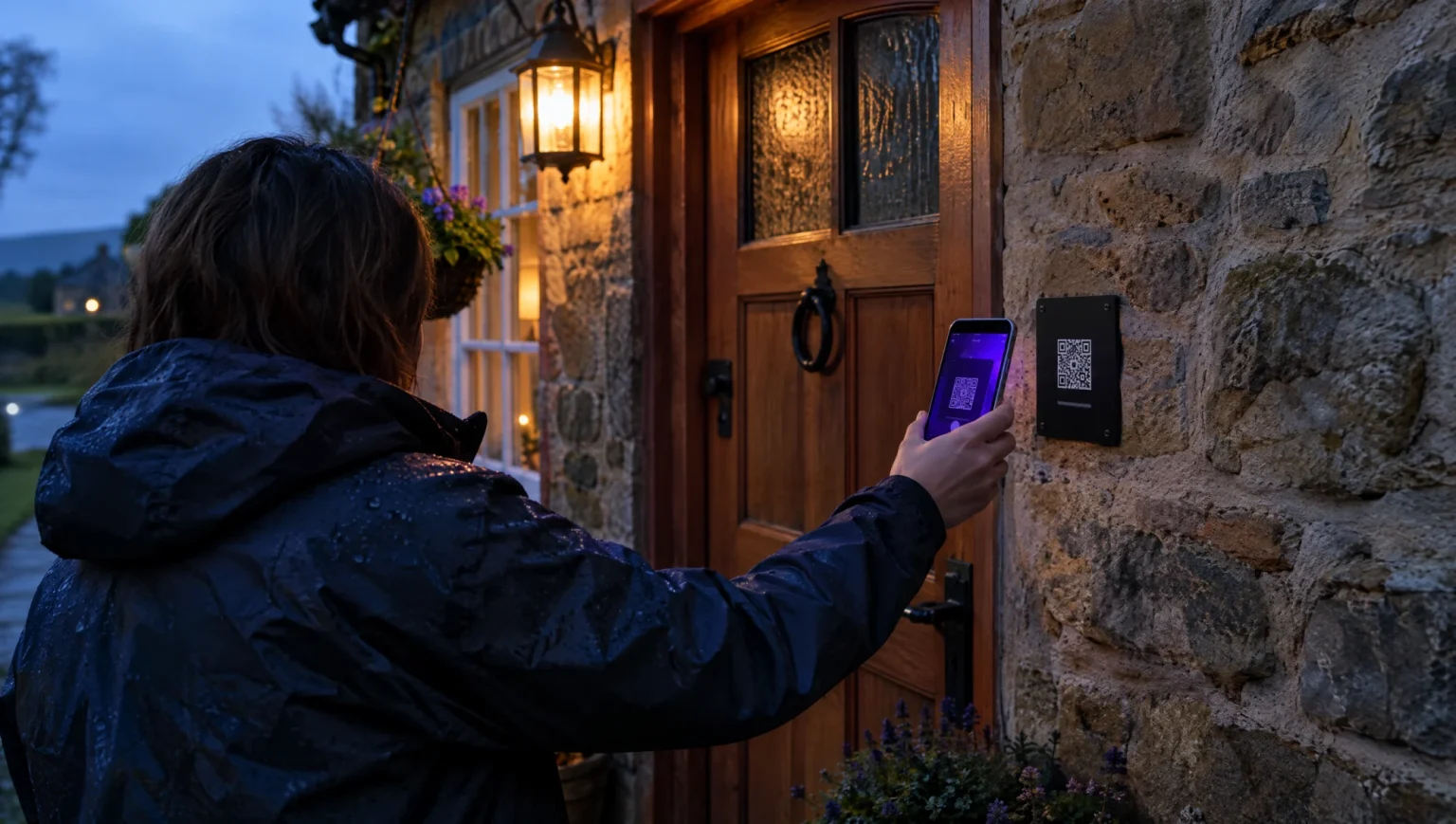
Regimate Premises gives each property its own QR code. Put the “Emergency contact” label on a door, gate, meter cupboard or window. If a neighbour, guest or passer-by spots a problem, they scan it, describe what’s wrong and can add up to three photos. Your keyholders are emailed straight away with a link to acknowledge it, and you can chat with the person who raised the alert.
- No app or account needed for the person scanning.
- No phone numbers on display. Keyholders’ names and numbers are never shown on the public page.
- Emergencies first. The alert page shows the right emergency number for their country, so anyone facing a fire or a crime in progress calls 999 first.
- Built-in limits stop the same person sending repeated alerts, and photos are moderated before anyone sees them.
- Keyholders don’t need a Regimate account, so you can add a cleaner, neighbour or property manager.
It’s free for one property and one keyholder. Premises Plus covers up to three properties with up to ten keyholders each, opening hours with out-of-hours alerts flagged, and encrypted access notes (such as a key safe code) revealed only to a keyholder who acknowledges an alert. See pricing.
Important: Regimate Premises isn’t an emergency service or a monitored alarm. If anyone is in danger, or a crime is in progress, call 999.
Your empty property checklist
- Read your policy’s unoccupancy conditions and tell your insurer about long empty periods.
- Find the stopcock, and turn off and drain the water if the property will be empty for a while.
- Keep the heating on low in winter, and lag exposed pipes.
- Fit leak sensors and timer lights.
- Arrange regular checks, and log each visit.
- Keep your keyholder list current, with at least one person who lives nearby.
- Put up a QR alert label so anyone can let your keyholders know about a problem.
Frequently asked questions
How long can a house be left empty before insurance is affected?
Many home insurance policies limit cover once a property has been unoccupied for 30 or 60 days in a row, especially for theft and escape of water. Check your policy and tell your insurer before the limit is reached.
Does a holiday let need special insurance?
Usually, yes. Standard home insurance often excludes letting to paying guests, so most holiday let owners need a specialist policy. Check its conditions on inspections and empty periods.
How can neighbours contact me about a problem at my property?
Give them a way that doesn’t rely on one person’s phone number. A QR alert label on the door lets anyone report a problem to all your keyholders at once, without your contact details being on display.
Is a QR alert label a replacement for a burglar alarm?
No. It’s a way for people who notice a problem to tell you quickly. It works alongside alarms, sensors and regular checks, not instead of them.
Sources
- Association of British Insurers data for 2025, reported by Reinsurance News, February 2026. reinsurancene.ws
- Prestige Underwriting claims data, reported by Insurance Business, 2026. insurancebusinessmag.com
- Financial Ombudsman Service, unoccupied properties. financial-ombudsman.org.uk
- Office for National Statistics, Crime in England and Wales: year ending December 2025. ons.gov.uk
- Home Office, Crime outcomes in England and Wales 2025 to 2026. gov.uk