In short
- Ask for the serial numbers and a receipt before you agree to anything.
- Walk away from scratched-off serials, ground-off engraving, fresh paint over marks, or a seller who won’t meet at home.
- Check serial numbers on a stolen-property register before you pay.
- If you think you’ve bought stolen tools, take them to the police. Don’t give them back to the seller.
Second-hand tools can be a great deal. Quality kit lasts for years, and buying used is cheaper and less wasteful than buying new. But the second-hand market is also where most stolen tools end up.
In Direct Line Business research, 47% of tradespeople said they had been approached by, or seen, people selling tools they suspected were stolen, and two-thirds supported a ban on selling used tools without proof of ownership.1 Police regularly seize stolen tools from car boot sales and online listings. In one case in Hounslow, officers seized around 400 suspected stolen tools at a single car boot sale.2
Buying stolen tools fuels the thefts, and it can leave you out of pocket when the police take them back. Here’s how to protect yourself.
Red flags that tools might be stolen
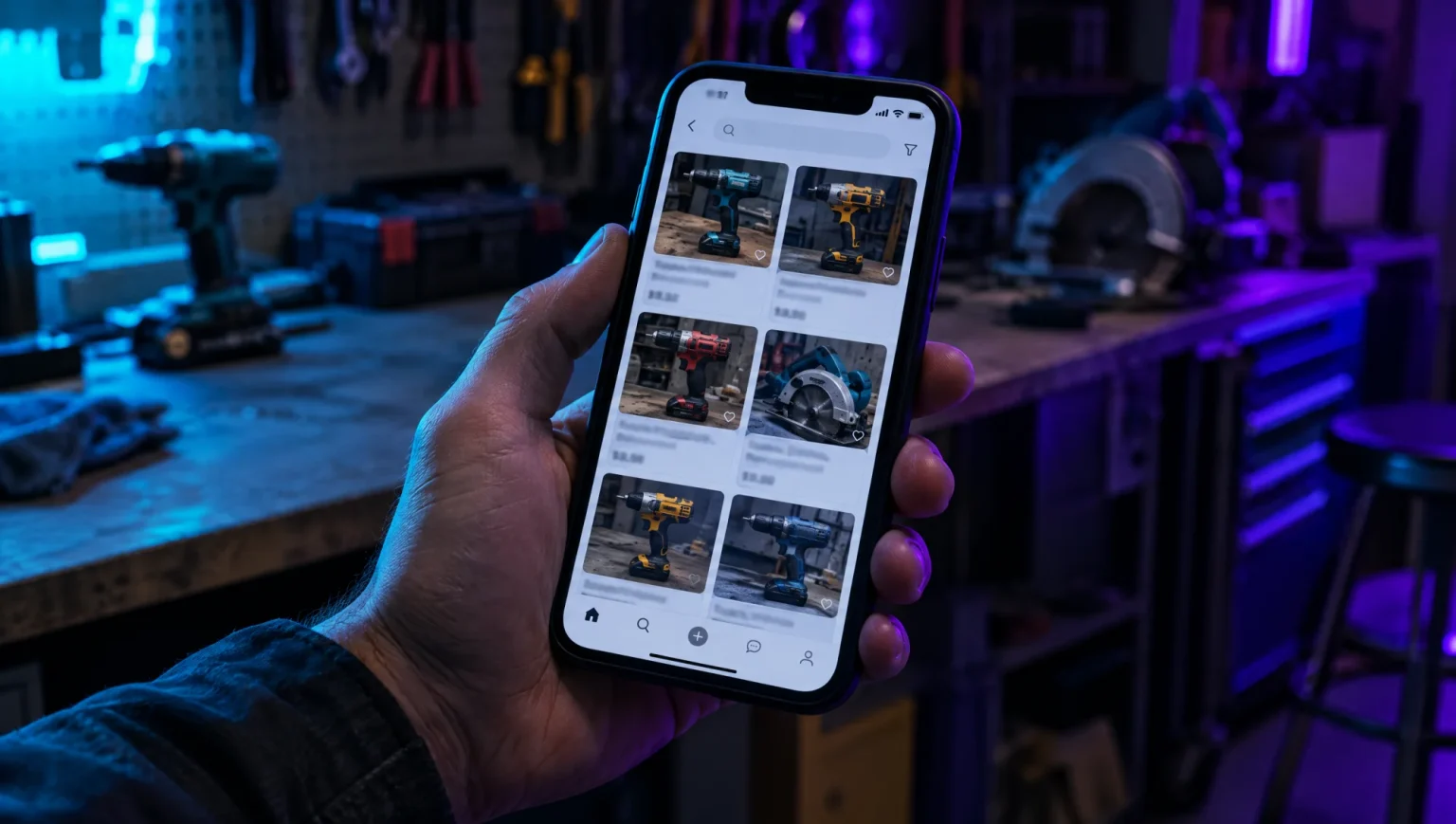
- The price is too good. A nearly new cordless kit at a third of retail price deserves questions.
- Lots of the same thing. Several identical drills, or a “van clear-out” of mixed brands, can be a sign of a theft being sold off.
- Serial numbers removed. Scratched, sanded or missing serial labels are a major warning sign. There’s rarely an innocent reason.
- Marks covered up. Ground-off engraving, fresh paint over one area, or stickers peeled off cases.
- No batteries or chargers, or chargers that don’t match the tools.
- Someone else’s name on the case, the tools or the paperwork.
- The seller won’t meet at home, insists on a car park, wants cash only, or is in a hurry.
- Vague answers. Can’t say where they bought it, how old it is or why they’re selling.
Checks to make before you pay
- Ask for the serial numbers before you meet. An honest seller won’t mind. Someone who refuses has given you your answer.
- Check the serials on a register. Search the serial number in Regimate’s Magic Search to see whether it’s registered as lost or stolen. Searching never reveals the owner’s identity. If you’re buying a phone, run an IMEI check too.
- Ask for a receipt or proof of purchase, and check that the details match the tool in front of you.
- Inspect the tool closely for removed labels, engraving, UV marks or paint over markings.
- Meet at the seller’s address if you can, so you know where they live.
- Pay in a traceable way, such as bank transfer, and keep the listing, messages and the seller’s details.
Selling tools? Make life easy for honest buyers: share the serial numbers, show the receipt, and if the tool is registered with Regimate, transfer the ownership to the buyer so the record moves with it.
What does the law say?
In England and Wales, handling stolen goods is an offence under section 22 of the Theft Act 1968. It covers someone who dishonestly receives goods, or helps to keep or sell them, “knowing or believing them to be stolen”. The maximum sentence is 14 years.3
The key words are knowing or believing. If you genuinely didn’t know, you’re unlikely to be in trouble. But if you ignored obvious warning signs, such as a scratched-off serial number or a price that made no sense, that could count against you. And whatever the legal position, stolen goods can be seized and returned to their owner, so you can lose both the tools and your money.
What to do if you think you’ve bought stolen tools
Citizens Advice says that if you bought something without knowing it was stolen, you shouldn’t get into trouble, but you shouldn’t keep it either. Don’t hand it back to the seller. Contact the police and explain what happened.4
- Call 101 or report online to your local police force.
- Give them the listing, messages, the seller’s details and how you paid.
- If you paid by card or through a platform with buyer protection, ask about a refund.
If you’d rather not give your name, you can pass information about stolen goods to Crimestoppers anonymously.
Running a marketplace, pawnbroker or repair shop?
You can check items automatically. Regimate’s Finder API lets marketplaces, pawnbrokers, insurers and repairers check whether a serial number, IMEI, frame number or VIN is registered as lost or stolen with one call. No owner data is returned, and the owner is alerted that a check was made. The Sandbox plan includes 50 free lookups a month.
Frequently asked questions
How can I check if a tool is stolen?
Ask the seller for the serial number and search it on a stolen-property register such as Regimate’s Magic Search. Also check for removed serial labels, ground-off engraving and missing receipts, and be wary of prices far below market value.
Is it illegal to buy stolen tools if I didn’t know?
Handling stolen goods requires knowing or believing the goods were stolen. If you genuinely didn’t know, you’re unlikely to have committed an offence, but the tools can still be seized and returned to their owner. Report it to the police as soon as you suspect.
Should I give stolen tools back to the seller?
No. Citizens Advice recommends you contact the police rather than returning goods to the seller, so they can be reunited with their real owner.
Is buying tools at car boot sales safe?
Plenty of car boot sellers are honest, but police regularly seize stolen tools at car boot sales. Check serial numbers, look for removed markings and walk away if the price or the seller’s story doesn’t add up.
Sources
- Direct Line Business, “No receipt, no resale” research, January 2025. directlinegroup.co.uk
- Metropolitan Police, appeal to reunite tradespeople with stolen tools, December 2025. news.met.police.uk
- Theft Act 1968, section 22, and Sentencing Council guideline on handling stolen goods. legislation.gov.uk, sentencingcouncil.org.uk
- Citizens Advice, if you think you’ve bought stolen goods. citizensadvice.org.uk