In short
- Record the serial number, a photo and the receipt for every tool and battery.
- Mark tools visibly (engraving, paint) to deter thieves, and invisibly (UV, forensic marking) to prove ownership.
- Register everything in one place, so a recovered or second-hand tool can be traced back to you.
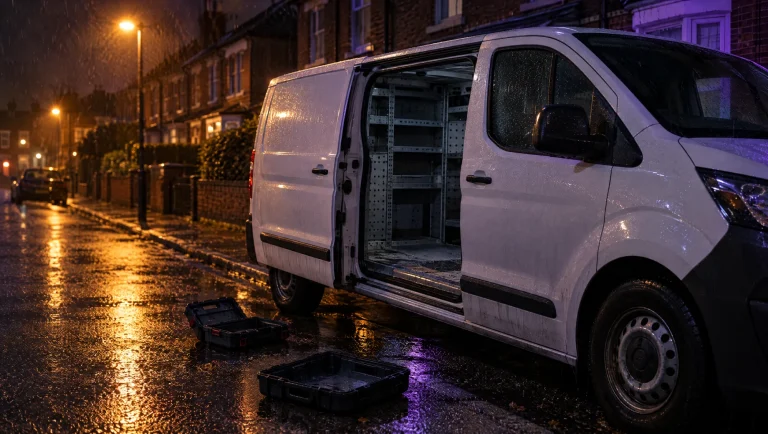
Here’s a frustrating truth about tool theft: police do recover stolen tools. They find them in lock-ups, at car boot sales and in the backs of vans. The problem is getting them home.
In December 2025 the Met seized around 400 suspected stolen tools, worth roughly £80,000, from a car boot sale in Hounslow. After appealing for owners to come forward, officers could return only about £6,000 worth, because most people had no way of proving the tools were theirs.1 When police recovered about £40,000 of power tools in Wednesbury, in the West Midlands, a few weeks later, they too asked victims for serial numbers and markings.2
Yet NFU Mutual found only 59% of tradespeople record their serial numbers, and just 41% keep photos of their tools.3 Marking and registering your kit takes one evening. Here’s how to do it.
Step 1: Record what you’ve got
Start with the basics, because they’re the strongest proof of ownership you can have.
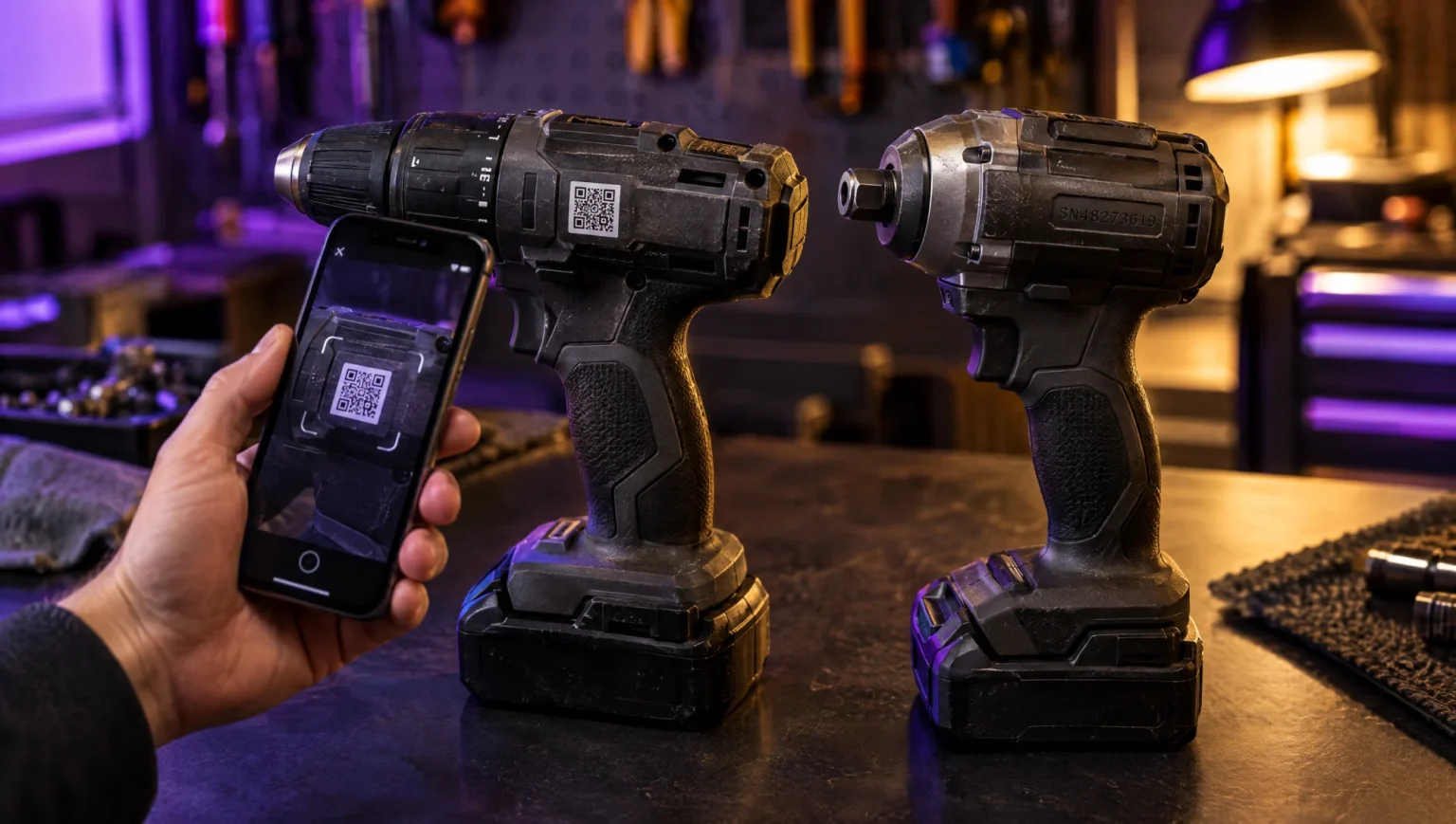
- Serial numbers. Usually on the rating plate or label, often near the battery mount or on the motor housing. Batteries and chargers have their own serial numbers, and they’re stolen and sold separately, so record those too.
- Photos. Take one of the whole tool and a close-up of the serial label and any marks, scratches or repairs that make it yours.
- Receipts. Save invoices from your merchant or trade counter account. A photo of a paper receipt is fine.
Do this as you buy new tools from now on, too. It takes a minute when the box is still on the bench.
Step 2: Mark your tools visibly
Visible marks put thieves off and make stolen tools harder to sell, because buyers can see they belong to someone else.
- Engraving. Engrave your postcode and house number, or your company name, into the casing in at least two places, including one that’s hard to see. An inexpensive engraving pen does the job. Avoid engraving over vents, batteries or anything structural.
- Paint or colour-coding. A stripe of bright paint on cases, handles and batteries makes your kit instantly recognisable, at a car boot sale or across a busy site.
- Labels and tags. A durable label with your business name or a QR code shows the tool is registered and gives an honest finder a way to reach you.
Step 3: Mark your tools invisibly
Visible marks can be ground off or painted over. Invisible marks are there for when that happens.
- UV pen. Writes a mark that only shows under ultraviolet light. Cheap, but it can fade, so re-apply it every year or so.
- Forensic marking. Kits containing a uniquely coded liquid that’s registered to you. Police can read the code from a tiny trace, even after a clean-up.
Step 4: Make them findable
Marks help prove a tool is yours once it’s found. A scannable label helps it get found in the first place. A Regimate QR label or NFC sticker on a tool, case or battery opens a private page for that item when it’s scanned. Whoever finds it can message you there without seeing your name, number or address, and you won’t see theirs.
You can print QR labels on standard A4 Avery sticker sheets in three sizes, write the link to an inexpensive NFC sticker, or use pre-printed Regimate tags. See how tagging works.
Step 5: Register everything in one place
A shoebox of receipts is better than nothing, but a register is far better. When you register a tool with Regimate:
- It gets a permanent Regimate ID, and its serial number is locked to you. Serial numbers are unique across the registry, so nobody can register your tool after you.
- You can add up to ten photos and a private proof-of-ownership file, such as the receipt.
- If it’s stolen, you can mark it as stolen with your crime reference number. It then shows as stolen to anyone who checks the serial in Magic Search.
- If a dealer, marketplace or insurer checks the serial through our Finder API, you’re alerted straight away.
- Sell a tool on? You can transfer ownership to the buyer, so the record moves with it.
It’s free for up to 50 items, so most sole traders can register their whole kit at no cost. If you run a team, Regimate Enterprise gives you a shared asset register with locations, such as individual vans, and custody of every tool.
Which marking method does what?
| Method | Deters thieves | Proves ownership | Helps it come back |
|---|---|---|---|
| Serial number record | No | Yes, strongly | Yes, if police check |
| Photos and receipts | No | Yes | Helps with insurance |
| Engraving | Yes | Yes | Sometimes |
| Paint or colour-coding | Yes | Partly | Easy to spot for sale |
| UV pen | No | Yes, until it fades | Sometimes |
| Forensic marking | Yes, with warning stickers | Yes, strongly | Yes |
| QR or NFC label | Yes | Partly | Yes, finders can contact you |
| Online register | Indirectly | Yes | Yes, when serials are checked |
The one-evening plan
- Lay everything out: tools, batteries, chargers, lasers, cases.
- Photograph each item and its serial label.
- Engrave or paint-mark each tool and battery.
- Add a UV or forensic mark somewhere discreet.
- Stick on a QR label or NFC sticker.
- Register each item, with photos and receipts, in your free Regimate account.
Then keep it up: register new tools as they arrive, and remove ones you sell. If your tools are ever stolen, everything you need for the police and your insurer is ready. Our 24-hour checklist covers what to do next.
Frequently asked questions
What should I engrave on my tools?
Your postcode plus house number, or your company name, is the most common choice. Engrave it in at least two places, one of them hard to spot, and avoid engraving your phone number on tools you might sell.
Where is the serial number on a power tool?
It’s usually on the rating plate or label, often near the battery mount, on the motor housing or under the handle. Batteries and chargers have separate serial numbers on their own labels.
Does marking tools reduce my insurance premium?
Some insurers ask whether you mark and record your tools, and good records make claims faster and easier. Check with your insurer or broker.
Can someone else register my stolen tool?
Not on Regimate. Serial numbers are unique across the registry, so once you’ve registered a tool, nobody else can register the same serial number.
Sources
- Metropolitan Police, appeal to reunite tradespeople with stolen tools, December 2025. news.met.police.uk
- Express & Star, police recover £40,000 of stolen power tools in Wednesbury, December 2025. expressandstar.com
- NFU Mutual research reported by PBC Today, June 2023. pbctoday.co.uk